Present in 19 countries

Mobility, a driver of empowerment and social cohesion

Beyond infrastructure and technical constraints, mobility is first and foremost a human and democratic issue: enabling everyone to choose and follow their own path in life.
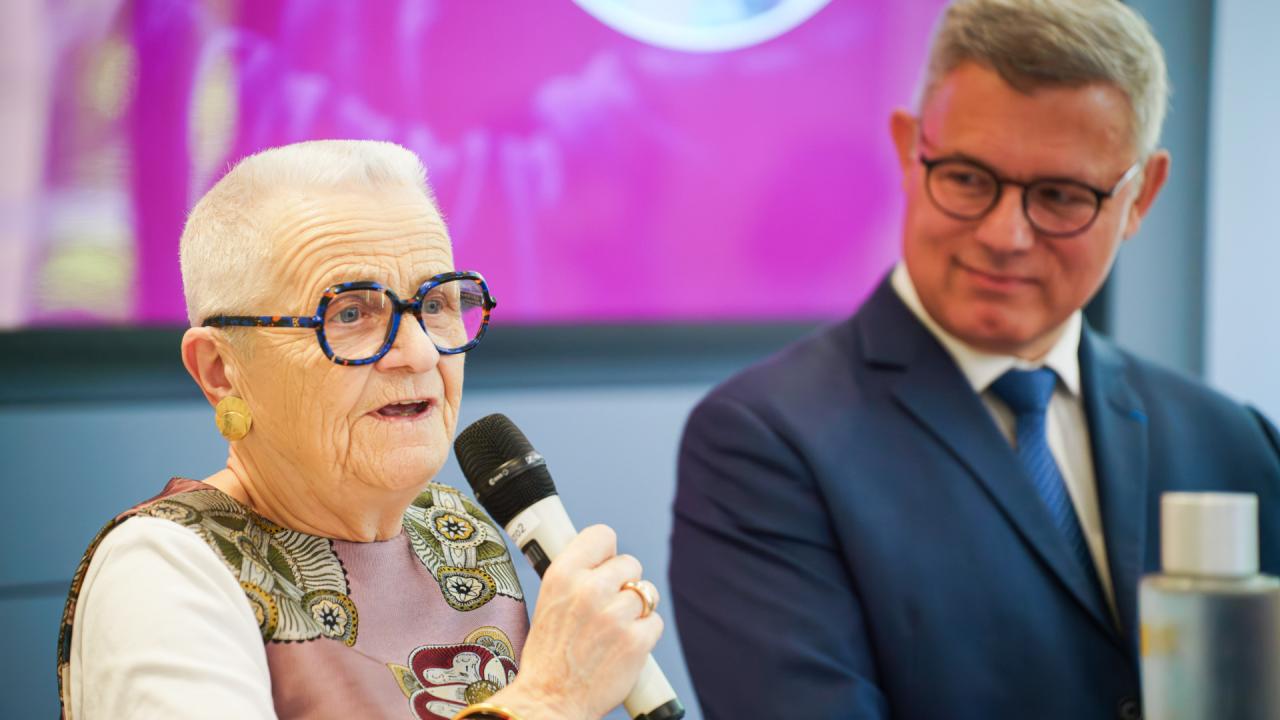
At the Geonexio conference, Françoise Gatel stressed that everyday journeys form the bedrock of social cohesion, particularly in peri-urban areas.
How does mobility relate to social cohesion? Françoise Gatel
In this interview filmed at the event organised in April 2026 by Geonexio, the think & do tank of Transdev in France, Françoise Gatel highlights the essential role of mobility as a driver of social inclusion and access to opportunity. She stresses the need to develop innovative, flexible solutions adapted to real travel patterns, building mobility services around the needs of citizens and local areas.
I find the objective of this think tank extremely compelling because it addresses the question of mobility solutions. Mobility is both a highly technical issue and, above all, an immensely social one. Mobility is what enables people to access public services, employment opportunities, culture, and education. In other words, it gives everyone the ability to move beyond their immediate living environment and pursue the future they choose for themselves. For a family living in a suburban area, there are four daily destinations to consider: primary school, high school, university, and the workplace. We therefore need to develop innovative, agile, and flexible solutions at the scale of the local travel area. This means looking at the real geographic area within which people live, work, and travel, which very often extends far beyond administrative boundaries. In other words, we must innovate and build transport services based on actual demand rather than relying on standardized, one-size-fits-all solutions, because it is clear that this approach no longer works. Local authorities need to work together, and they must collaborate with businesses and citizens alike in order to truly meet people's needs and reflect the way they live and move.
A technical subject, but above all a social one
Mobility is both a highly technical subject and an intensely social one. It is what allows everyone to access public services, employment, culture and education, and therefore to move beyond their local area to pursue the future they choose.
For a family living in a peri-urban area, there are four travel destinations every day: primary school, secondary school, university and work.
“It is thanks to mobility that we can give everyone access to a job, to culture and to education, and therefore, in a sense, allow them to leave their local area to pursue the future they choose”
Building services around demand
The top-down, standardized approach no longer works. We need to invent innovative, agile and flexible solutions, but at the scale of the living area, that is, the local area as citizens actually experience it, which extends well beyond administrative boundaries.
This means building services around demand rather than offering a standardized service. It also means local authorities working together, with businesses and with residents, to match their real needs as closely as possible.
Eco-friendly website
Latest page modification date :
B
This page is times lighter than average
Emissions from this page
Estimated calculation per visit
0.1
in grams
of CO2 equivalent
of CO2 equivalent