Present in 19 countries

World expert in heavy modes public transportations
Transdev's expertise in heavy modes of transport (rail, metro, light-rail, cable car) goes back more than 40 years (Nantes light-rail), including 27 years in rail (since the opening to competition in Germany in 1998).

Four structuring modes, more than 150 lines
- What heavy modes cover: regional trains, light rail, metros and urban cable cars.
- Scale of operations: more than 150 heavy transport lines worldwide.
- Track record: over 40 years of expertise since the Nantes tramway, including 27 years in rail.
- Leadership positions: world leader in tramway network operation, operator of both conventional and fully electric metros.
- What this infrastructure delivers: social cohesion, sustainable mobility and regional development.
Transdev is:
- The world’s leading light-rail operator, with 62 lines in 9 countries
- Germany’s leading private rail operator since 1998
- A major rail operator in Sweden for over 25 years
- The very first private operator to operate, in the Région Sud from the end of June 2025, the very first regional rail line opened to competition in France since 1937
- Operator of the world’s largest light-rail network, Yarra Trams in Melbourne, Australia
Our Heavy Modes Manifesto
Global Expertise Driving Sustainable Mobility
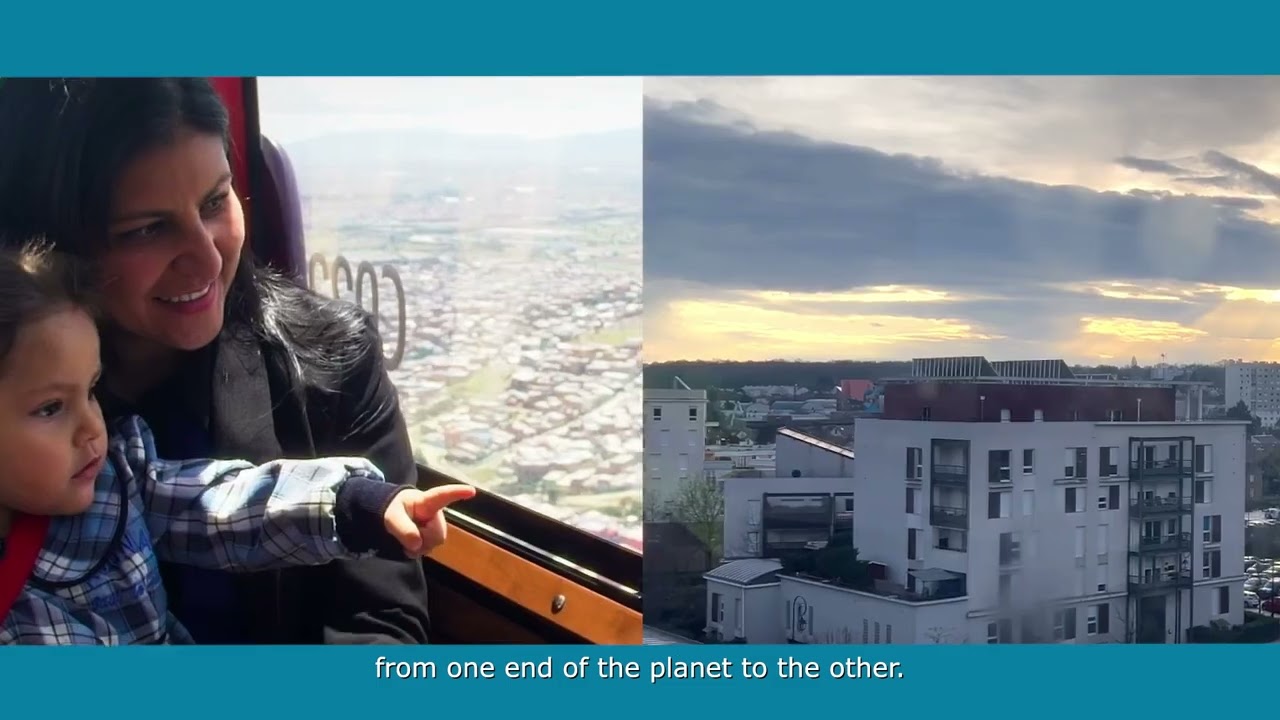
[00:05] Moving people is what drives us every day. With passion and engagement, we transport 14 million people daily from 19 different countries through efficient and innovative transportation modes. [00:18] For decades, we provide solutions of all shapes all around the globe. We are world experts and leaders in heavy modes, with 168 million kilometers operated from Melbourne to Quito, Montreal, Stockholm, Wellington, Munich, and more. Thanks to heavy and light rails, metro, and cable, we move together. [00:56] Involved at the early stage of the development or joining the project further down the line, we cover the lifecycle of a metro project hand-in-hand with strong local partners and their communities to deliver performance with zero compromises for safety, security, and quality. [01:24] From Paris to Bogotá, the cable car both facilitates travel and opens up isolated areas. From one end of the planet to the other, we continue to move forward. [01:43] Because a light rail network is at the heart of any city's vital rhythm, we design and deliver a unique and distinctive experience across every stage of its lifecycle. From Rabat, Oran, to the world's largest light rail network in Melbourne. For us, heavy modes act as the backbone of a multimodal mobility network, connected to the last-mile solutions. [02:15] Built from scratch or operated for decades, we carry millions of passengers over thousands of kilometers each year, drawing on extensive rail expertise across all types of lines: from commuter services such as the iconic Marseille-Nice line, to suburban networks such as the S-Bahn systems in Hannover or Bremen, to small lines such as Nancy-Contrexéville and the Hunsrückbahn. [02:40] We of course know how to face the winters of the Roslagsbanan lines of Stockholm, and the best stops to join the beach in Marseille and Nice, but also to scale a team from 2 to over 200 employees in months. [02:52] Behind these large-scale systems, there are people. Heavy modes are first and foremost about technical mastery. It requires deep expertise in maintenance of rolling stock. This is a technical pride built in the field for Transdev experts, at the service of clients and passengers. [03:08] We are people transporting people across cities, countries, and years. We are people who serve mobility, and we are experts in heavy modes. We all move together.
Transdev and heavy
modes

149
heavy haul lines operated worldwide
83
railway lines
60
tramway lines
3
metro lines

Global Presence and Expertise Transdev is a global leader operating across four continents (Europe, Africa, Australasia, the Americas) [00:07]. The company provides a wide range of transport services: Regional trains [00:11] Metros [00:15] Tramways (light rail) [00:19] Urban cable cars [00:23] Country Examples Europe Germany: A regional rail operator since 1998, Transdev is the country’s leading private railway operator with 58 regional lines and 150 million passengers per year [00:30]. Sweden: Operates the Mälartåg network around Stockholm since 2024 (12.5 million passengers/year) and the Östgötapendeln network since 2025 [00:42]. Ireland (Dublin): Operator of the tram system since 2004, serving 55 million passengers per year [01:00]. Netherlands (Utrecht): Will operate three tram lines starting in December 2025 [01:09]. Spain (Barcelona): Tram operator since 2004 with 6 lines and 35 million passengers/year [01:17]. France: Strong presence in Mulhouse, Reims, and Nantes (tram networks), as well as at Paris CDG Airport (automatic metro systems LISA and VAL) [03:16]. A new urban cable car project is planned in Île‑de‑France for late 2025 [03:55]. In the Southern Region (PACA), Transdev will launch the first regional rail line opened to competition in June 2025 (Marseille–Nice) [04:07]. Africa Morocco (Rabat–Salé): Tram operator since 2011, carrying 44 million passengers per year with 66 vehicles [01:27]. Oceania Australia (Melbourne): Operator of the world’s largest tramway network since late 2024 (24 lines, 1,700 stops, 150 million passengers/year) [01:42]. Also present in Sydney [01:59]. New Zealand (Wellington): Operator of regional trains since 2016 [02:06]. Americas Ecuador (Quito): Operates the highest metro line in the world (2,850 meters altitude) since December 2023 [02:21]. United States: Present in Cincinnati and Milwaukee (tram systems) and in Florida (rail maintenance for Tri‑Rail) [02:38]. Canada (Ontario): Developing tramway lines in Mississauga (Hazel McCallion Line) and a metro line in Toronto (Ontario Line) [02:54]. Final Message The closing message highlights that Transdev leverages its global expertise to create strong local impact, under the slogan: “Heavy Mobility: Global Expertise for Local Impact” [04:31].
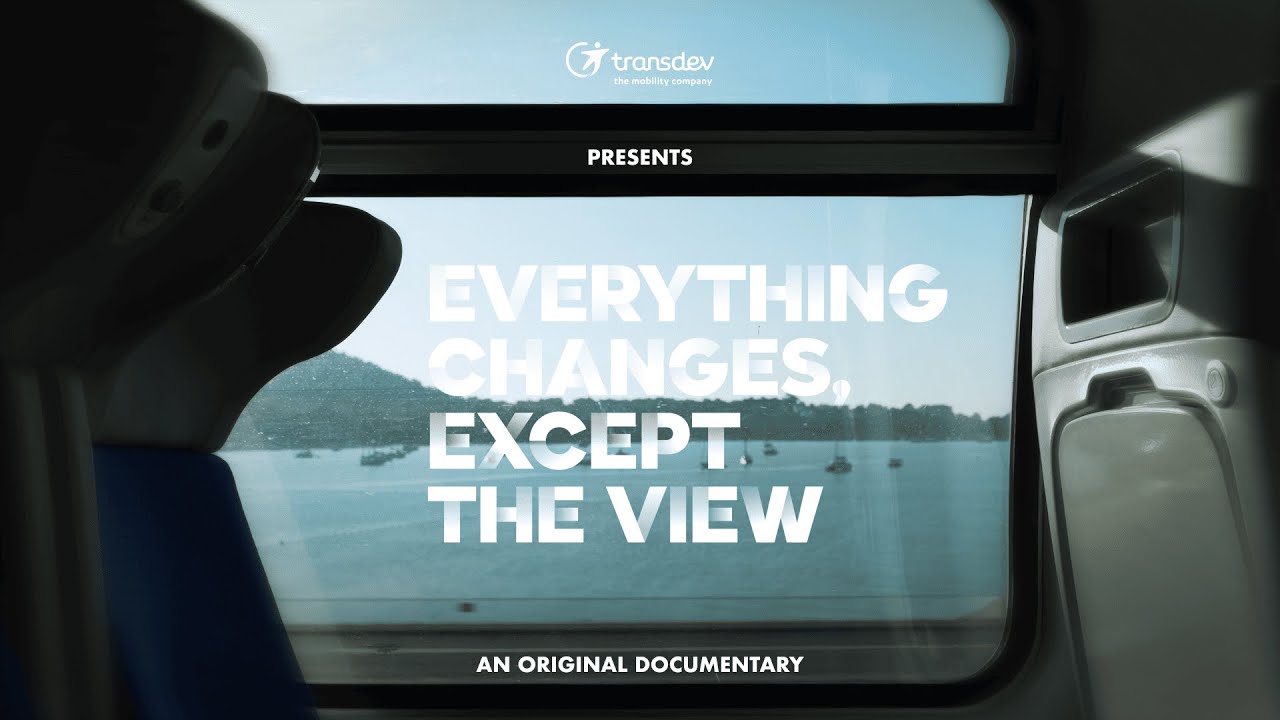
Everything Changes Except the View: An Original Documentary on the Marseille–Toulon–Nice Line by Transdev
Since June 29, 2025, Transdev has been operating a new rail service along the Marseille–Toulon–Nice coastal corridor, marking a historic milestone in the opening of rail traffic to competition in France. Led by the Sud Region, this initiative doubles train frequency, with departures every hour on weekdays and up to 16 round trips on weekends. Nine stations are served, from Marseille Saint-Charles to Nice-Ville, with a journey time of 2 hours and 40 minutes.
The documentary “Everything Changes Except the View” offers an inside look at a historic transformation: the first regional railway line in France to be opened to competition. For the first time, Transdev opens its doors and reveals the behind-the-scenes efforts of a human, technical and territorial project of unprecedented scale: the launch and operation of the Marseille–Toulon–Nice line.
“Everything Changes Except the View”
Over several months, our teams followed the women and men who made this journey possible: drivers, maintenance technicians, station staff, line managers, rail experts, project directors, TRSI teams… All of them key contributors to a project that is reshaping the mobility landscape in the southern region of France.
World leader
Through its “heavy” modes of transport (regional trains, trams, metros, and urban cable cars), Transdev is asserting its position as a global leader in sustainable mobility.

8
countries (world's leading light rail operator)
18
light rail network
61
light rail lines
1094
vehicles in operation


Our expertise in heavy public transportation modes
These structural infrastructures are at the heart of the major challenges facing public transport, namely social cohesion, sustainable mobility, and finally, regional planning.


Frequently asked questions
What are heavy modes in public transport?
Heavy modes are high-capacity public transport services running on dedicated infrastructure: regional trains, light rail, metros and urban cable cars. They form the backbone of a network, around which bus routes and feeder services are organised.
How many heavy transport lines does Transdev operate?
Transdev operates more than 150 heavy transport lines worldwide, which places the group among the reference operators in these segments. The scope covers regional trains, light rail, metros and urban cable cars.
How long has Transdev been operating heavy modes?
Transdev's expertise in heavy modes goes back more than 40 years, starting with the Nantes tramway. It includes 27 years of rail operations, since the German market was opened to competition in 1998.
Why would a city choose a heavy mode over a bus service?
A heavy mode carries passenger volumes a bus route cannot handle, on dedicated infrastructure that guarantees reliability. These structuring lines address three challenges: social cohesion, sustainable mobility and regional development. In return, they require heavier infrastructure investment and a longer delivery timeline.
Does Transdev operate rail lines opened to competition?
Yes. Transdev is the first private operator to run a regional rail line opened to competition in France, between Marseille and Nice, which entered service on 29 June 2025. It is the first opening of its kind since 1937. The group has also operated regional lines in Germany since 1998 and in Sweden since 1999.
Does Transdev operate automated metros?
Yes. Transdev develops and operates both automated and conventional metros in several major cities, including in closed environments such as airports. The group runs a metro line at Paris Charles de Gaulle airport and has international experience ranging from conventional to fully electric systems.
Eco-friendly website
Latest page modification date :
B
This page is times lighter than average
Emissions from this page
Estimated calculation per visit
0.14
in grams
of CO2 equivalent
of CO2 equivalent