Present in 19 countries

RAIL
With 33 regional rail lines in operation across five countries, Transdev has extensive experience in rail transportation. In France, the Group has been operating the Marseille-Toulon-Nice route on behalf of the Région Sud since June 2025.
Our global rail presence
Present in 5 countries, the Transdev Group operates 83 rail lines.
- Transdev operates in Germany (the leading private regional rail operator after DB), Sweden, France, the United States (rail maintenance), and New Zealand.
- 83 railway lines, including 58 in Germany (since 1998), 14 in Sweden (since 1999), 5 lines in New Zealand, 1 in the United States for maintenance only, 2 in France (Carhaix-Guingamp-Paimpol & Panoramique des Dômes – Before the Marseille-Toulon-Nice line was put into service).

Everything Changes Except the View – An Original Documentary on the Marseille–Toulon–Nice Line by Transdev
Since June 29, 2025, Transdev has been operating a new rail service along the Marseille–Toulon–Nice coastal corridor, marking a historic milestone in the opening of rail traffic to competition in France. Led by the Sud Region, this initiative doubles train frequency, with departures every hour on weekdays and up to 16 round trips on weekends. Nine stations are served, from Marseille Saint-Charles to Nice-Ville, with a journey time of 2 hours and 40 minutes.
“Everything Changes Except the View” offers an inside look at a historic transformation: the first regional railway line in France to be opened to competition. For the first time, Transdev opens its doors and reveals the behind-the-scenes efforts of a human, technical and territorial project of unprecedented scale: the launch and operation of the Marseille–Toulon–Nice line.
Over several months, our teams followed the women and men who made this journey possible: drivers, maintenance technicians, station staff, line managers, rail experts, project directors, TRSI teams… All of them key contributors to a project that is reshaping the mobility landscape in the southern region of France.
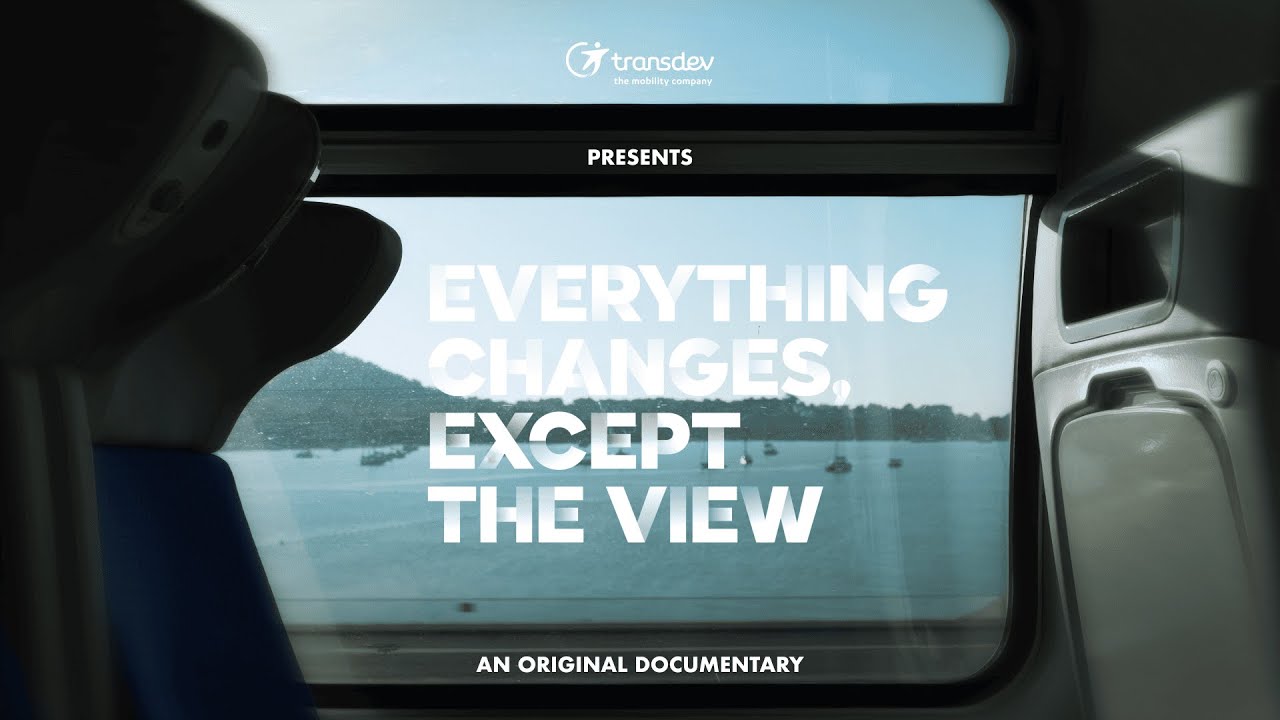
A Historic Milestone for French Rail Transport Thierry Mallet (CEO, Transdev Group): “It's historic — a truly significant moment. The Marseille–Nice line marks the first time a region has decided not to entrust a rail service to SNCF.” Renaud Muselier (President of the Southern Region): “We're the first in France, no less. We needed a partner, and Transdev was the one chosen.” Alix Lecadre (Rail Director, Transdev France): “Being a new entrant in the French rail market is anything but simple. We started from a blank page, where we had to write absolutely everything from scratch.” “It’s a crazy challenge — but an exciting one.” The Challenges of Launching and Producing the Service Vincent Destot (Regional Director, Transdev South): “You can feel the excitement rising — and a certain pressure as well. The Marseille–Nice story began in 2018 with the new railway reform law.” Thierry Mallet: “At the starting line, Transdev set off with a pebble in its shoe. The company had ordered 16 trainsets from Alstom and received only half.” “It was an extremely stressful period… we had to put real pressure on Alstom to move things forward.” Training and the Driver Profession Mélissa Vinckier (Train Driver): “After nine months of training, honestly, it’s a real source of pride to be able to drive this train from Marseille to Nice.” “I spent five years working in retail… and I wanted to change my life.” Thierry Mallet: “In Germany, we've historically trained our drivers, our mechanics, our teams. That means we’ve built a true Transdev train culture over the years.” A New Passenger Experience Renaud Muselier: “We’re moving to modern trains — comfortable, bike‑friendly trains where passengers feel safe on board.” “The commitment is 97% on‑time performance… and we've doubled the service, all for the same cost to the community.” Passenger Testimonial: “I’ve been taking this line for ten years… it wasn’t very clean, and it felt quite dark. This morning, when I got on the train, it was bright, spacious, and you could tell it was clean.” Conclusion and Perspectives Alix Lecadre: “From now on, we must deliver on our promise every single day. And that is a real challenge.” Thierry Mallet: “The first day is important, of course — fundamental even — but it’s not everything. What matters now is that, with the teams we’ve put in place, we can turn this first success into long‑term performance.”
Transdev and rail transport worldwide
Transdev operates

760
trains
208 M
passengers/year
7370 KM
of tracks
France – Reopening of the Nancy-Contrexéville line
The consortium comprising NGE, Transdev and Banque des Territoires (Groupe Caisse des Dépôts) has been awarded the public service concession for the Nancy-Contrexéville railway line by the Région Grand Est.
It’s a first in two respects: it’s the first rail contract awarded by the Grand Est Region since the opening of the market to competition, and the first contract in France to be operated under a new model, enabling a single service provider to operate the rail service and manage the infrastructure.
Closed since 2016, this essential regional line will be brought back to life thanks to a 22-year partnership between NGE Concessions, Transdev and Banque des Territoires (Groupe Caisse des Dépôts). This reopening represents a crucial step in the opening up of the line to competition, as well as a powerful symbol for the attractiveness of the western Vosges and the southern part of the département of Meurthe-et-Moselle. Then, in 2027, there will be 30 daily round trips between Nancy and Contrexéville.
Germany – Confirmed leadership since 1998
Transdev is Germany’s leading private rail operator, with a history that dates back over 125 years. Transdev is active in the regional railway market with contracts by the regional public transport authorities since the opening to competition in 1998. Transdev also runs many bus networks all over Germany.
Through its many subsidiaries and brands like NordWestBahn, Bayerische Regiobahn, Mitteldeutsche Regiobahn or S-Bahn Hannover, the Group operates a total of 58 regional lines all over Germany, covering more than 3,500 kilometers of network. Every year, over 141 million passengers use these trains, served by 236 electric trains and 287 railcars.
The railway networks are spread across most of Germany’s Länder, including Bavaria, Baden-Württemberg, Rheinland-Pfalz, North Rhine-Westphalia, Lower Saxony, Bremen, Schleswig-Holstein and Saxony. Transdev embodies a model of regional contract operation by public transport authorities, combining operational excellence and adaptation to local needs.
From long-distance regional lines (such as the international connections from Munich to the Austrian border in Salzburg and Innsbruck), to regional and innercity S-Bahn networks (with six Bremen S-Bahn lines and 10 Hanover S-Bahn lines), local lines and even short lines (four in Baden-Württemberg), Transdev serves many regions of Germany, mainly for daily mobility but also for tourism like the Munich to the Bavarian Alps connections.
Rail is one of the cornerstones of sustainable mobility. Every day, railway networks connect cities, regions and communities, providing safe and efficient transportation for millions of passengers while supporting economic and social development.
Across all Heavy Modes activities, the objective remains the same: delivering safe, reliable and people-centered mobility. By combining expertise, innovation and collaboration, Transdev continues to help keep communities connected through Rail.
Rail Expertise Powering Regional Mobility
Transdev Heavy Modes

What fascinates me is the excitement and enthusiasm. I’m not a trained railway professional, but it’s fascinating how broad the railway industry is, despite the fact that passengers only see a small part of it. Trains still run on steel wheels and rails, just as they did 190 years ago. Yet most people have no idea of everything that happens behind the scenes, and that is what captivated me. People often say that public transport is a very small world, but in reality it is a large family that brings together a wide range of professions. What I find particularly rewarding in my work is bringing together engineers, technicians, and specialists from many different disciplines to deliver a public service: running trains every day for passengers. The railway sector is characterized by the fact that it is a complete ecosystem involving many stakeholders that must work together. There is far more organization involved than most people realize. Trains need to be fueled and prepared every day. All of this requires extensive planning to ensure that everything works as smoothly as passengers expect when they look at a timetable. Good leadership is essential, but so is a deep understanding of a highly complex environment. It also means having a strong team with diverse knowledge, expertise, and experience, bringing together the right people and combining their skills to deliver a high-quality service. We face a common challenge regarding the condition of railway infrastructure. While the situation is somewhat better in Germany than in France, Germany has chosen to undertake a massive network modernization program, creating significant challenges, particularly in maintaining train operations and ensuring punctuality. Our responsibility is to manage these challenges as effectively as possible. This starts with vehicle reliability and availability. Safety is, of course, a fundamental requirement and must always be guaranteed. Beyond that, maintenance schedules and inspections must be completed on time. This is also a leadership and workforce issue, and fortunately we have excellent teams who are willing to go the extra mile, even on weekends, when exceptional situations arise. Vehicle availability is one key aspect. Another is the personnel who operate the trains, because without train drivers, no train can run. I believe we manage this quite well through our organization, supported by team leaders, regional training programs, and the ongoing development of our employees. To launch Transdev’s railway operations in France, we trained around forty drivers, as well as customer service agents who work onboard trains and welcome passengers at stations. This was an opportunity to instill the spirit of service that defines us at Transdev. In the railway industry, safety plays a central role, particularly operational railway safety and, increasingly, cybersecurity. Information systems are becoming ever more important in managing our operations. If, for example, the system used to supervise our train fleet were to fail or be compromised by a cyberattack, we would lose visibility over what is happening across the network. To launch our rail operations, we were able to draw on the expertise available throughout the Transdev Group. This is a real advantage at Transdev, where we can mobilize colleagues from countries that already operate rail services, particularly Germany. One of the key contributions from our German colleagues was their experience with information systems. The tool they use has been deployed in Germany for many years. When we decided to adopt the same solution, it also gave Transdev the opportunity to acquire the latest version of the system and test the optional artificial intelligence module designed to optimize scheduling and duty rosters. This enables teams responsible for operational planning and tender preparation to work more efficiently while producing more robust schedules and staffing plans. I believe this is one of the reasons why we, and I personally, have such a broad perspective. We are able to address the full complexity of rail transport, from infrastructure and rolling stock to certification, regulatory requirements, safety management systems, operational safety, and team leadership. We can cover this entire spectrum while relying on specialists with deep expertise in each area and bringing all of those competencies together to deliver a successful railway operation.
Sweden – A wide range of rail services
In Sweden, Transdev has been operating several types of rail services since 1999:
- Mälartåg, a regional rail line to the west of Stockholm, operated by Transdev since June 2024.
- Transdev has won the contract to operate the Östgötapendeln regional train line between Norrköping and Linköping, starting June 1, 2025.
- Transdev operates the Roslagsbanan lines to the north of Stockholm. These are suburban lines operated under a long-term contract.
- Snälltåget, a brand of long-distance trains, linking three European capitals by night: Stockholm, Copenhagen via Malmö, and Berlin.

New Zealand – The Capital Rail Experience
It was in 2016 that Transdev Wellington (TDW) began operating the passenger rail network on behalf of the Greater Wellington Regional Council (GWRC), under the Metlink brand.
Transdev operates five regional lines around the capital, on a network of 154 km of track with 49 stations. TDW provides over 2,000 weekly services, with 1.3 million journeys and 3.22 million km covered per year.
From the outset, Transdev had set up a control center to monitor service and track control in direct contact with the safety team. The contract includes maintenance, driving, traffic control (ROC) and customer service. Transdev’s contract has been renewed until 2031.

United States – Maintenance expertise
In Florida, Transdev is providing its expertise in rail infrastructure maintenance and signalling for the 129 km Tri-Rail line linking Miami to Fort Lauderdale and West Palm Beach, managed by the South Florida Regional Transportation Authority. This contract illustrates the Group’s technical capacity to maintain complex rail lines.


Discover our other modes of transportation
At Transdev, we have expertise in all modes of public transport, enabling us to devise sustainable, accessible mobility solutions tailored to each region. Thanks to our multimodal expertise, we design reliable, efficient, and innovative networks that are designed to meet the specific needs of users and support local ecological transitions.


Eco-friendly website
Latest page modification date :
B
This page is times lighter than average
Emissions from this page
Estimated calculation per visit
0.12
in grams
of CO2 equivalent