Present in 19 countries

Public transportation and local areas: moving beyond the urban-rural divide

Public transport is often reduced to a question of buses or metros in city centres. Its role runs far deeper: it is the social, environmental and economic backbone of our local areas.
What is the role of public transport?
Jean Coldefy, Geonexio conference 2026 In this interview filmed at the event organised in April 2026 by Geonexio, the think & do tank of Transdev in France, Jean Coldefy revisits the essential role of public transport in our societies. Beyond its contribution to reducing urban congestion and carbon emissions, it is an indispensable lever for guaranteeing access to mobility for all and for strengthening the links between urban, peri-urban and rural areas, seen as a single living local area.
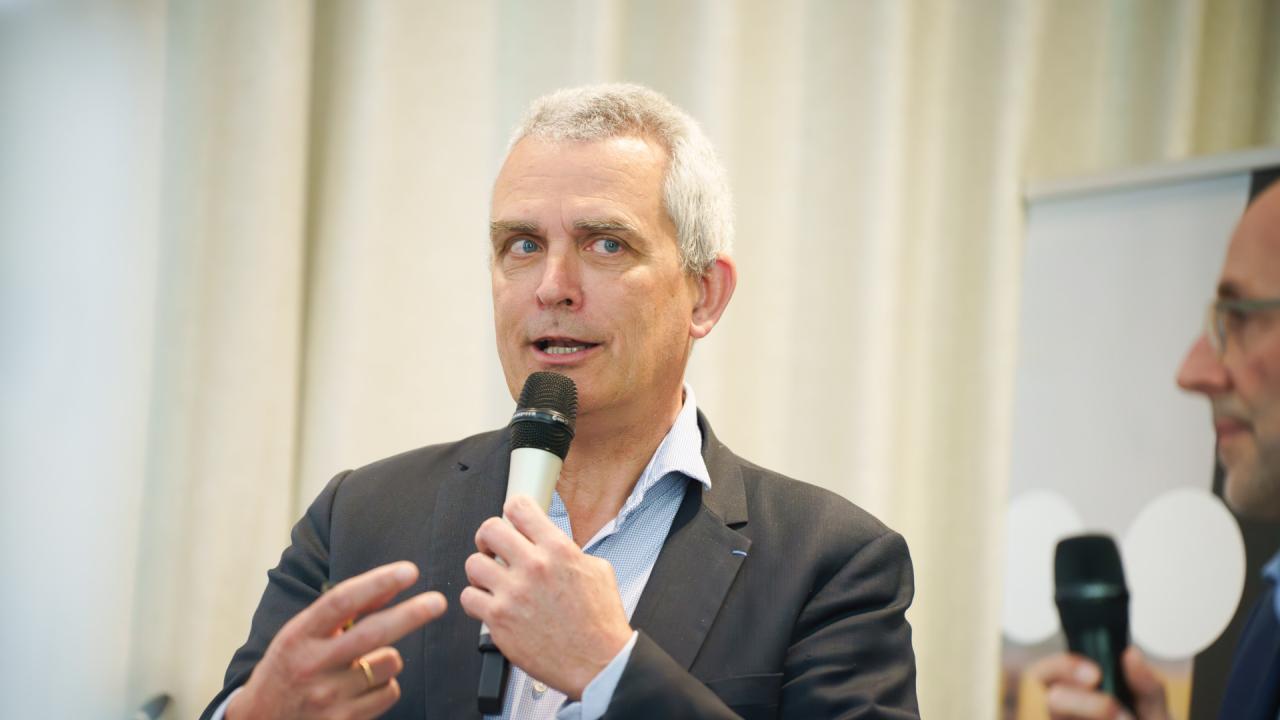
[00:05] The Three Fundamental Roles of Public Transport Reducing Urban Congestion: A metropolitan area cannot function effectively without public transport. Otherwise, it risks experiencing significant urban sprawl, similar to the North American model. Social Inclusion: Ensuring the right to mobility for people who do not own a private vehicle, particularly lower-income households. Environmental Transition: Reducing carbon emissions by providing a cleaner alternative to individual internal combustion engine vehicles. [00:28] Breaking Down Barriers Between Cities and Peri-Urban Areas The city extends beyond its administrative boundaries and encompasses its entire sphere of influence. Viewing the urban area as an isolated space creates artificial boundaries. In reality, for residents, the living area that connects peri-urban communities, rural areas, and the city centre forms a single, continuous territory.
The three pillars of collective transportation
- Urban viability: without collective services, cities choke on traffic and sprawl indefinitely, as in the North American model.
- Social justice: guaranteeing the right to mobility for households without a private vehicle, so they can access employment, training and services.Decarbonisation: offering a low-carbon alternative to dependence on combustion-engine vehicles.
The local area is a continuum
One of the major contributions of Geonexio's work is to move beyond a narrow view centred on the city. A citizen's living area today extends from peri-urban or rural areas right into the heart of the conurbation.
By setting rigid administrative limits, public policies risk creating artificial boundaries and fracturing local areas.

“A city is not just its urban area: it is also its whole zone of influence. For citizens, the local area is a continuum.”
Eco-friendly website
Latest page modification date :
The emissions calculation for this page is not yet available