Present in 19 countries

What continuum exists between social mobility and geographical mobility?


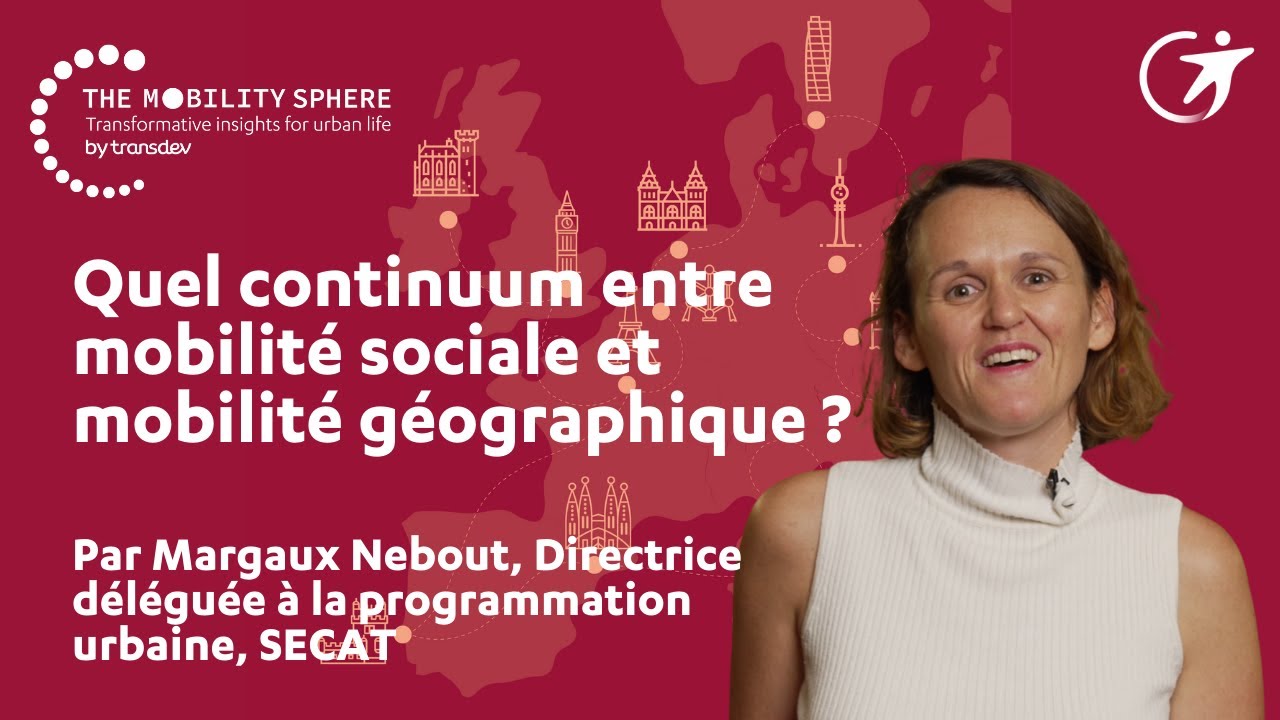
What continuum exists between social mobility and geographic mobility? “First of all, from the perspective of someone living in a large city — I’ve been living in Paris for several years and mainly use public transport there — the first observation is this: over the last ten, fifteen, even twenty years, we have gone from an offer primarily centered on public transport to one that is now highly developed around cycling [00:00]. And if I try to step outside my own personal experience and look at more sparsely populated areas, we can see a similar shift over 10, 15, 20 years: from a situation where car travel was easy to one that is now much more complex, largely because of the cost of travel and its impact on people’s purchasing power [00:00]. Ultimately, the real question is how people manage to make things work so they can travel daily from point A to point B. Point A — where they live — must fit within their housing budget and purchasing power. Point B — the workplace — must be accessible, and people must be able to get there properly [00:00]. What struck me when thinking about today’s debate is that we now have a tendency to oppose urban and rural worlds, even though, when you look at them individually, both often adopt quite individualistic perspectives. The urban cyclist says, ‘I need to move forward,’ sometimes ignoring road safety or traffic lights; the driver in a small town or medium‑sized city says, ‘Urban ecology is fine, but I need to get to work’ [00:00]. So the question today is: how do we reconcile these seemingly opposite positions, and above all, how do we rebuild a shared sense of purpose in mobility? That is what strikes me the most today — I feel we’ve lost a sense of the collective when it comes to mobility. I personally don’t take the metro as much anymore; I cycle, I move individually, and so I lose that shared mobility experience. And the same goes for someone who drives — they don’t experience that shared space either [00:00]. Transport is no longer a shared space, or at least the question is: how can it become one again? This ties back to other issues, like urban design and how we can make people want to use public transport again. There is work to be done, but many planning topics need to address mobility head‑on [00:00].”
In this interview, Margaux Nebout tells us about the link between social mobility and geographical mobility.
By adopting an urban perspective, I was able to make an initial observation: in the space of several years, we have moved from an offer mainly centred on public transport to a highly developed offer in terms of cyclability.
By trying to shift the focus towards an experience in looser territories, we have gone from the ease of travelling by car to a more complex situation relating to the question of the cost of travel and therefore of purchasing power. Ultimately, the question is how do people who travel manage to get by and manage to travel from point A (where they live) to point B every day? Point A has to be within their housing budget and their purchasing power. As for point B, they already have to have a job and be able to get there properly.
What struck me when reflecting on the current debate is that we now have too much of a tendency to want to set urban and rural against each other. Whereas they both adopt a fairly individualistic point of view. For example, there is the cyclist in the city who sometimes doesn't care about road safety or red lights. Whereas the motorist in a medium-sized town or village will say, "Urban ecology, OK, but I need to get to work".
How do we go about reconciling these opposing positions today, and how do we manage to find common ground in a mobility project? That's what strikes me a lot today, I feel that we have lost the sense of common ground in the issue of mobility. Personally, I don't take the metro much anymore, so I'm quite an individualist when it comes to travelling. In the same way that someone who travels by car doesn't have this commonality. Transport is therefore no longer a place of commonality, or how can it continue to become one?
This equation also links to urban design, on how to make people want to use public transport again.

Eco-friendly website
Latest page modification date :
D
This page is times lighter than average
Emissions from this page
Estimated calculation per visit
0.23
in grams
of CO2 equivalent
of CO2 equivalent